How it works
Three steps, then you just wait for the email
- 1
Describe the trip
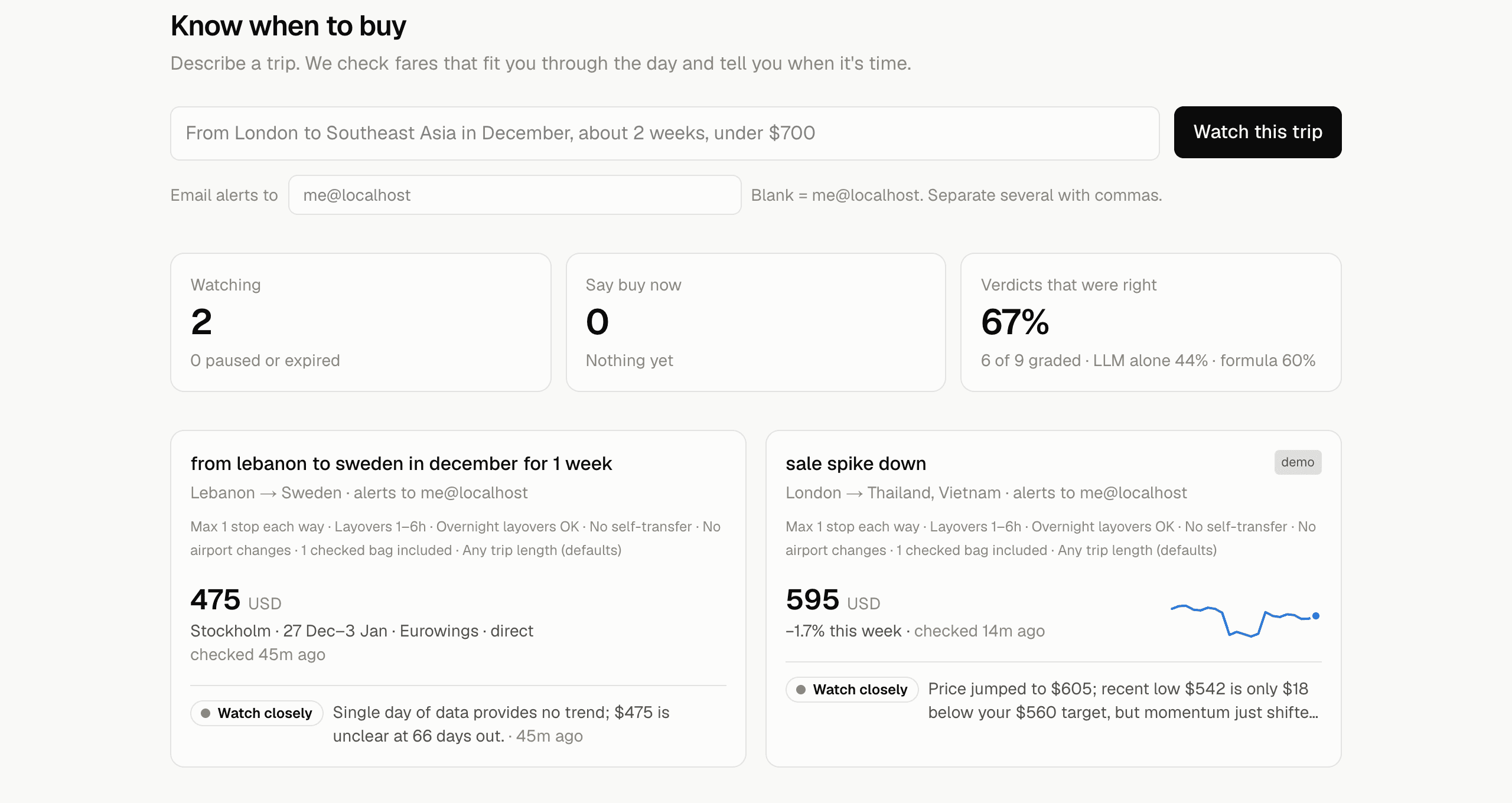
Type it like you'd text a friend. Claude turns it into a watch with your filters.
- 2
We check twice a day
Kiwi.com fares are searched every 12 hours and compared against their own history.
- 3
Get told when to buy
An email lands when the fare drops under your target or the verdict turns to BUY.
A verdict with receipts
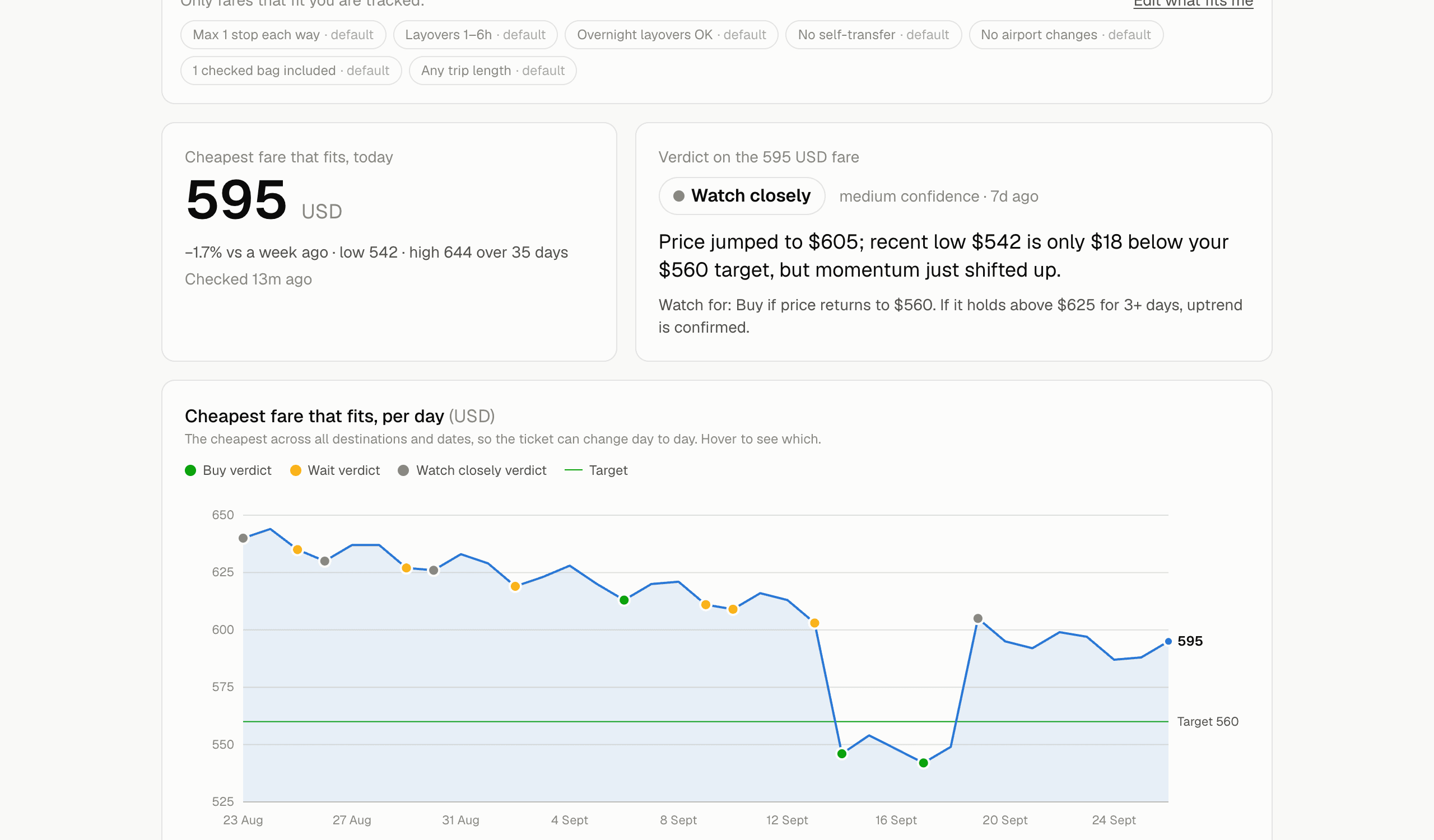
Every price judged against its own history
Code measures the lows, the trend, and the typical swing. An LLM weighs it up, and hard rules have the last word. Each dot on the chart is a verdict you can check later.
Alerts that matter
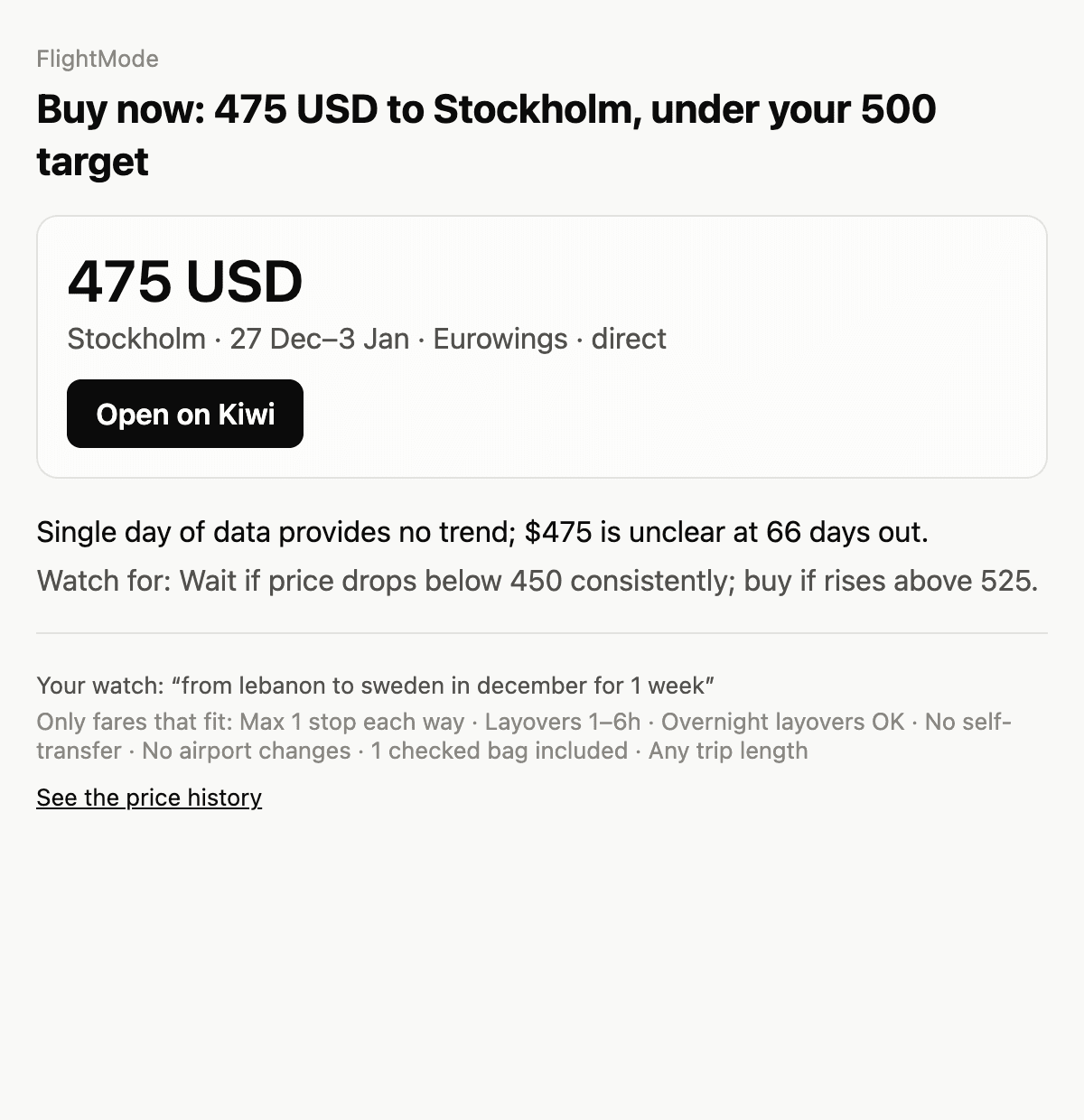
An email only when it's time to act
Under your target, a turn to BUY, or departure getting close. At most one a day, with the exact ticket and a link to book it.
What it does
Built to answer one question well
Plain-language watches
“London to Southeast Asia in December, about 2 weeks, under $700” becomes origin, destinations, dates, trip length, and a target.
Only fares that fit
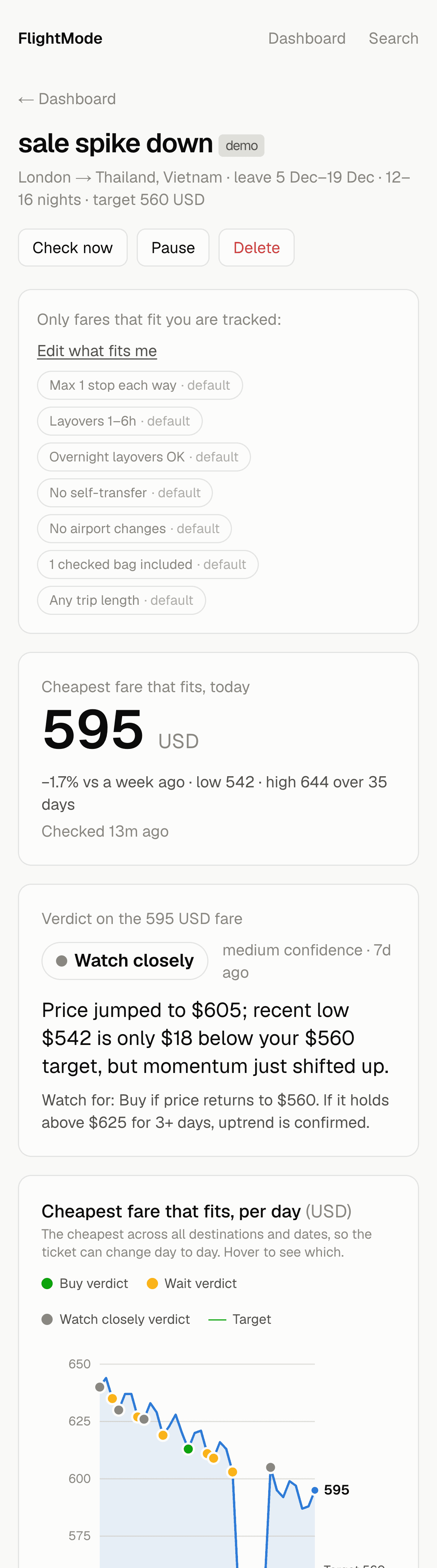
Max stops, layovers, self-transfer, bags, departure hours, and airlines are applied inside the search, not after it.
One real ticket
BUY, WAIT, or WATCH CLOSELY on the cheapest fitting fare, naming the city, dates, airline, and stops, with a booking link.
Graded accuracy
Every verdict is graded a week later against what prices did, next to a plain formula's score.
Stop refreshing fare sites.
Set a watch in ten seconds and let the verdict come to you.
Start watching a trip